Start with load, duty cycle, and proximity
- What must run at once? Motors, fans, welders, or tool circuits have different surge and continuous loads. A clear list of starting versus running watts narrows the generator class.
- How long must the unit run between refuels? Night concrete pours, shift turnovers, or aircraft service windows often span many hours; fuel capacity and efficiency matter.
- Can the unit sit close to the panel or task? Distance adds voltage drop and affects cable sizing and placement around doors, docks, and forklifts.
Waco-specific site conditions that change the plan
- Expansive clay soils can be firm in the morning and slick by late day after brief showers. Towable light towers and skid-mounted gensets need appropriate ground bearing and predictable tow paths from yard to pad.
- Summer heat and humidity reduce cooling margins. Generators working at higher loads may need extra space for airflow and heat dissipation. For light towers, lamp type and heat output near materials or equipment should be considered.
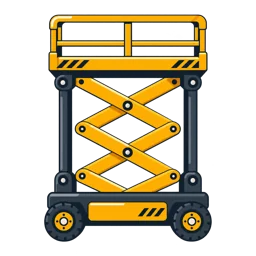
- Large interiors in repurposed logistics buildings often blend high-bay areas with narrow service corridors. That mix affects cable routing, mast height for lighting, and glare control near elevated work on scissor or boom lifts.
Narrow by equipment style
- Towable diesel generators: Suited to outdoor staging with changing pad locations. Check gate width, turning radius, and grade on access roads.
- Skid or stationary generators: Better when the unit can remain on a firm pad for multi-week projects. Confirm lift points and forklift capacity for placement. See also /forklift-rental/ and /telehandler-rental/ for material positioning.
- Vertical mast and balloon lighting: Useful for broad, low-glare coverage in large interiors where lifts and pedestrians mix. Verify ceiling height and obstruction clearance. For elevated fixture aiming near mezzanines, see /electric-scissor-lift-rental/.
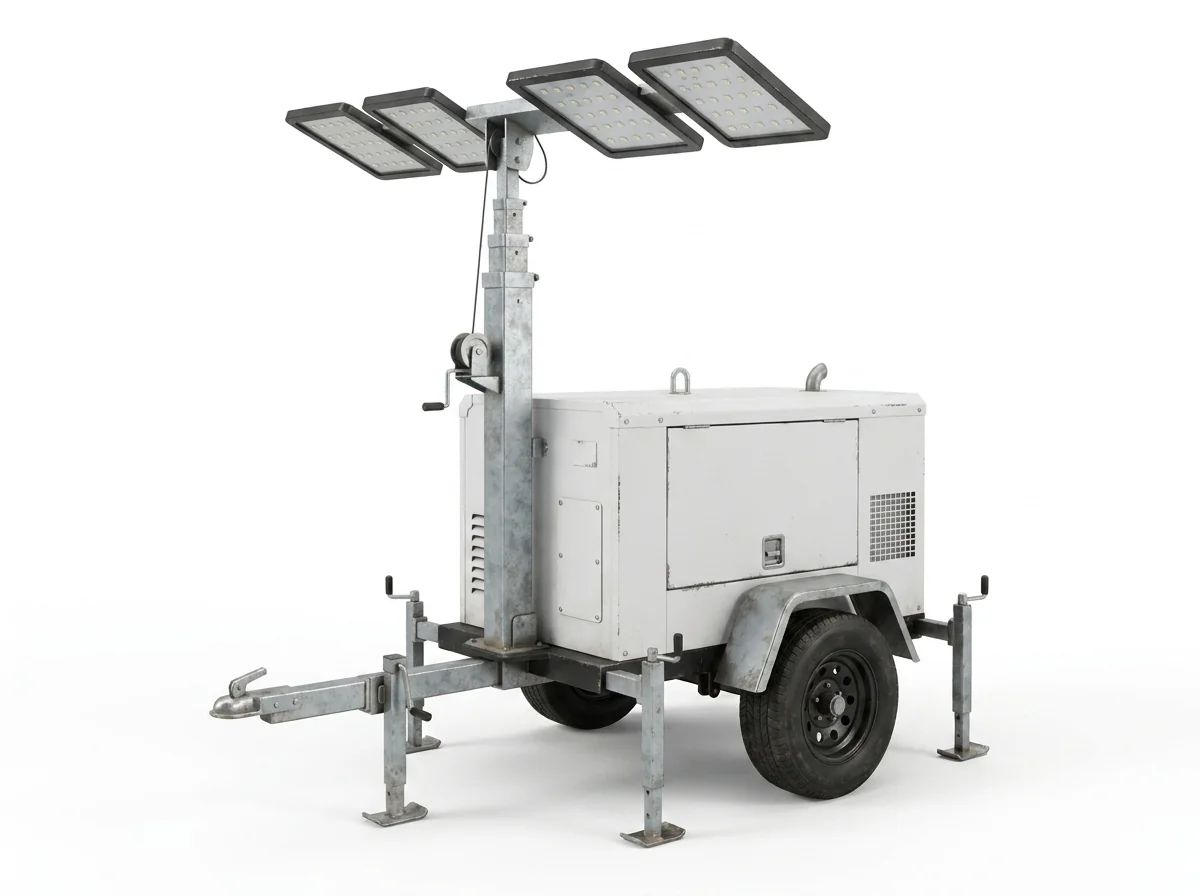
- Traditional light towers: Good for perimeter yards, laydown areas, and tarmac edges. Stabilizer footprint and surface firmness are the key constraints. Where terrain is uneven, coordinate with access from /rough-terrain-scissor-lift-rental/ zones if aerial work is nearby.
Access routes and shared workspaces
- Map generator placement so refueling trucks or service carts can reach the unit without crossing crane picks or aerial lift paths. In active industrial sites, separation from /boom-lift-rental/ work reduces conflicts.
- For hangar or high-bay maintenance, place lighting to avoid shadowing under wing roots, catwalks, or conveyors. A mix of tower height and interior mast heads often works best.
Actual site conditions, the selected unit’s instructions, and site procedures govern use, refueling, and placement.