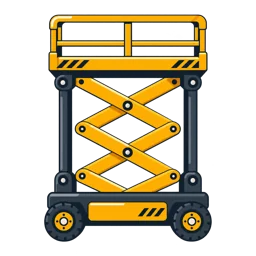
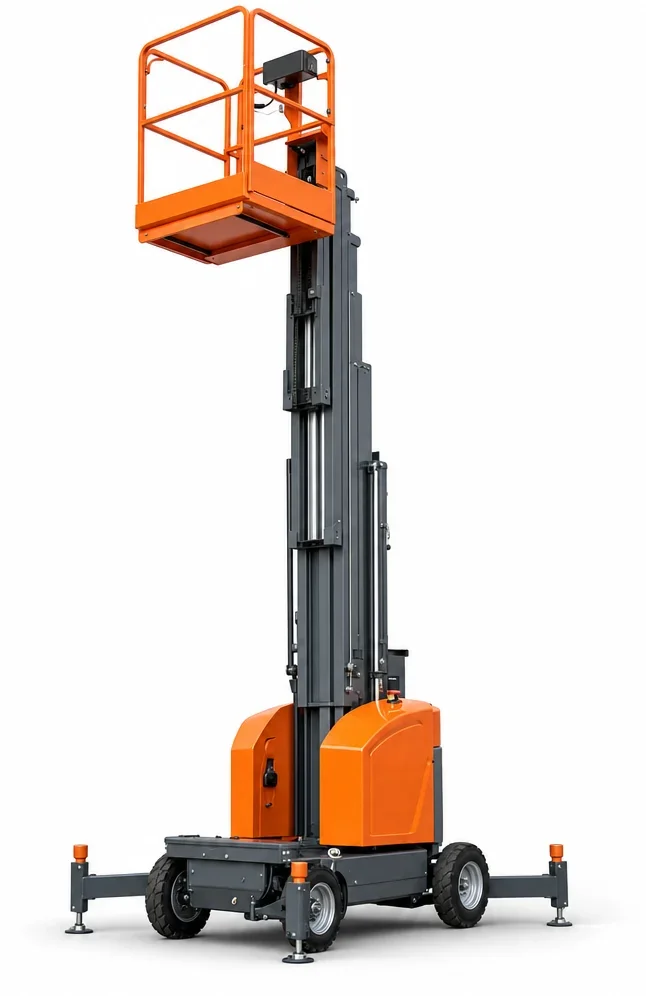
Confirm the access path
- Smallest doorway and corridor width determine platform type and stowed dimensions.
- Floor condition and weight limits on mezzanines or elevated slabs affect model choice.
- Turning space near the task matters in production cells and between racking.
Height and outreach limits
- Platform height should exceed the work point with tool clearance.
- Vertical masts excel at straight-up tasks; they offer minimal outreach. If you need to reach over obstacles, compare articulating booms at /articulating-boom-lift-rental/.
Power and indoor environment
- Electric drives support work where ventilation is controlled and noise sensitivity is high.
- Non-marking tires and zero-emission operation help maintain interior floors in local distribution buildings and manufacturing areas.
Local considerations
Waco’s industrial sites often blend old and new floor sections. Check for transitions and slope changes that reduce effective working height at the platform. Summer heat can raise interior temperatures in high-bay areas; staging and duty cycles should reflect the unit’s instructions and site procedures for elevated work.
For slab-only vertical work with larger platforms and straight travel paths, see /electric-scissor-lift-rental/. For outdoor or uneven approaches, compare /rough-terrain-scissor-lift-rental/.
Keep the comparison specific
A useful equipment discussion starts with the work height, the practical machine position, the route into the area, the floor or ground along that route, and the people, tools, or material involved. Those details clarify whether vertical access, outreach, or material placement is the real constraint.