Define the placement scenario
- What lift height and forward reach are required to land the load? Measure from the front tires to the drop point.
- How heavy and how dense is the load at full extension?
- Will the machine start on pavement, compacted base, or clay that can soften after rain?
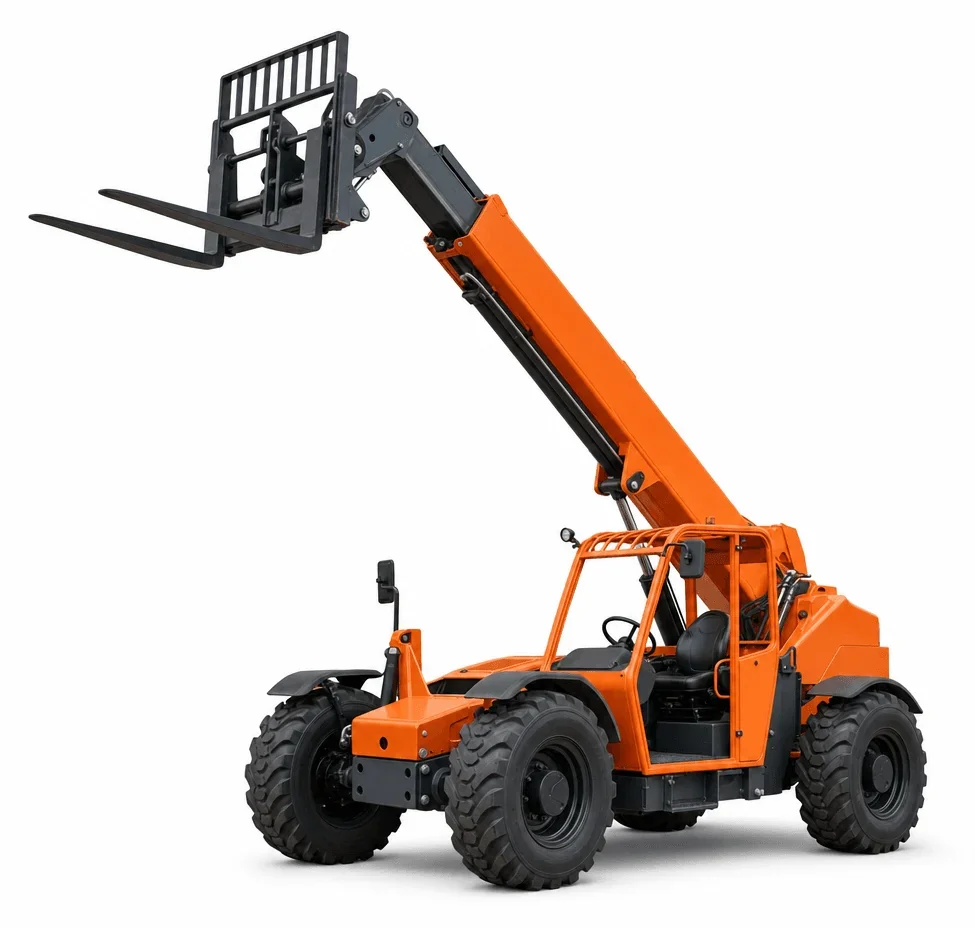
Forward reach at height is the limiting factor. Load charts vary widely, so the needed landing point typically determines the size class.
Terrain and tires in local conditions
Blackland Prairie soils can turn slick and rutted when wet. Rough-terrain tires and higher ground clearance are often matched to outdoor work around distribution yards and industrial sites. On finished slabs, narrower frames and non-marking tires may be preferred for limited access routes.
Attachments and visibility planning
Different carriage and fork styles affect effective load centers and visibility to the landing spot. Complex sites—such as production areas with overhead utilities or tight dock alleys—benefit from shorter wheelbases and better turning radii to align the boom without reworking staging.
Power, duty, and staging
- Fuel type follows indoor/outdoor mix and ventilation limits.
- Consider travel distance between staging and set points; longer runs influence size and cooling needs during hot, humid months.
For indoor vertical-only picks on smooth concrete, a warehouse forklift at /forklift-rental/ may fit better. If the task is personnel access rather than material placement, compare /boom-lift-rental/ options.