Start with task geometry
- Can the machine sit below the task? Straight-up access in aisles or slab floors points to /electric-scissor-lift-rental/ or /vertical-mast-lift-rental/.
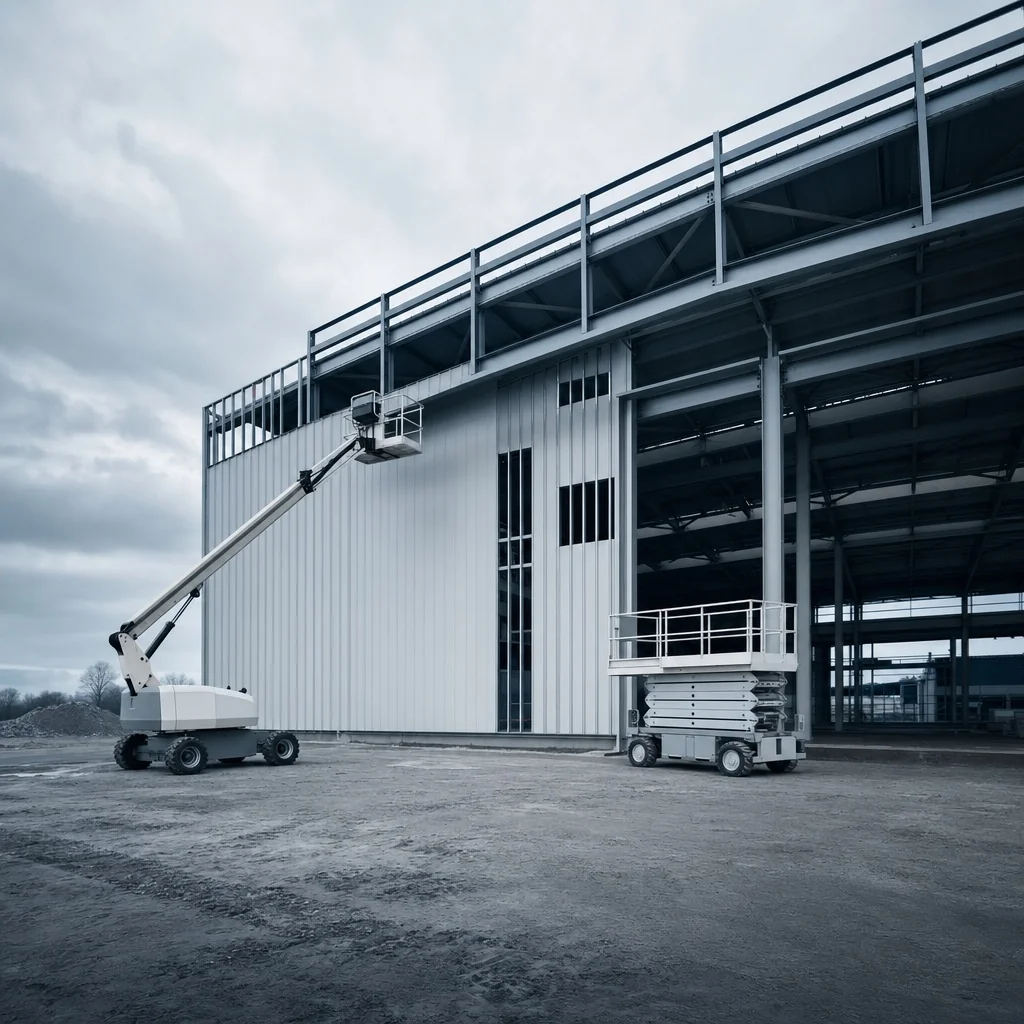
- Is the task offset over conveyors, wings, or racking? Outreach needs suggest /articulating-boom-lift-rental/ for up-and-over paths or /telescopic-boom-lift-rental/ for long, direct reaches.
- Does the work follow a facade or long wall line? Platform size and side clearance steer the choice between scissor widths and boom basket positioning; see /boom-lift-rental/.
Surface and route in Waco
- Indoors: Smooth slabs in large distribution buildings favor electric scissors and mast lifts. Aisle width, turning radius, and door thresholds limit machine size.
- Outdoors: Clay soils that soften after rain point toward /rough-terrain-scissor-lift-rental/ or booms with suitable undercarriage. Expect variable traction and require predictable access roads and staging pads.
Height, load, and cycle
- Height bands sort the category, then platform capacity refines it. Heavy component swaps or multiple technicians narrow toward higher-capacity scissors or telehandlers.
- Frequent repositioning over long distances weighs in favor of booms or telehandlers; short, repeated vertical tasks often suit scissors.
Adjacent site products
- Power and lighting: Night pours, shift turnovers, and hangar work may need /generators-light-towers-rental/ to maintain visibility and tool power during high-heat seasons when night work is common.
- Storage and control: Staged materials near the work face point to /storage-containers-rental/ and lane segregation with /temporary-fencing-barricades-rental/.
Industry patterns around Waco
- Modernized logistics and aerospace maintenance create recurring high-bay and hangar tasks with complex outreach. Manufacturing upgrades add frequent shutdown windows where access speed and clean routing matter.
Actual conditions, the selected unit’s instructions, and site procedures govern safe elevation and movement.